
Course Aim/Intended Learning Outcomes:
On completion of this course, students will be able to design and develop programs for specified tasks using
Java as an Object Oriented Programming Language.
Course Aim/Intended Learning Outcomes:
On completion of this course, students will be able to design and develop programs for specified tasks using
Java as an Object Oriented Programming Language.

Course Aim/Intended Learning Outcomes:
At the completion of this course, students will be able to
Required Tools
Operating System – Ubuntu 18.04
Libre Office 6.3 – Free and Open Source Office Suit
GIMP 2.10 – Graphic Design Software
Libre Office 6.3 can be downloaded from https://www.libreoffice.org/discover/libreoffice/
GIMP 2.10.12 or up version can be downloaded from https://www.gimp.org/downloads/

Course Aim/Intended Learning Outcomes:
This course provides core mathematical knowledge and skills that are essential for a student of ICT. At the
completion of this course students will be able to:

Course Aim/Intended Learning Outcomes:
After following this course, students should be able to

Course Aim/Intended Learning Outcomes:
At the completion of this course students will be able to;
Course Aim/Intended Learning Outcomes: At the completion of this course student will be able to
• Design web pages using HTML and CSS
• Use JavaScript to increase the interactivity of the web pages
• Discuss the skills and project-based experience needed for entry into web design and development careers
• Describe the basic concepts behind XML
• Employ CSS and XSL to format XML documents
• Explain different XML Document APIs
• Use a variety of strategies and tools for creating websites
• Introduction to Mean Stack and Bootstrap

Course Aim/Intended Learning Outcomes:
On completion of this course, students should be able to design and develop a database using a commercial
database product eliminating anomalies and applying fundamentals and concepts of database management
systems.
At the completion of this course student will be able to:
• Describe the role of a database management system the three-schema architecture and the difference
between conceptual, external and physical schemas.
• Demonstrate how organizational data can be modeled to produce conceptual schema by using ER data
modeling concepts to cater for the data requirements of that organization.
• Convert conceptual model into relational schema.
• List the operations of relational algebra and show how they can be used to create new relations from
existing relations.
• Formulate SQL queries of varying complexity.
• Describe view concept and discretionary access control as security mechanisms of database systems.
• Demonstrate how relations can be normalized upto 3rd normal form.
Course Aim:
• The main objective of this course is to provide a broad understanding of the software engineering process, concepts and the systematic development and management of software projects.
Intended Learning Outcomes:
After following this course, students should be able to
• explain the software engineering principles and techniques that are used in developing quality software products.
• apply software engineering principles and techniques appropriately to develop a moderately
complex software system.
Course Aim/Intended Learning Outcomes:
At the completion of this course student will be able to
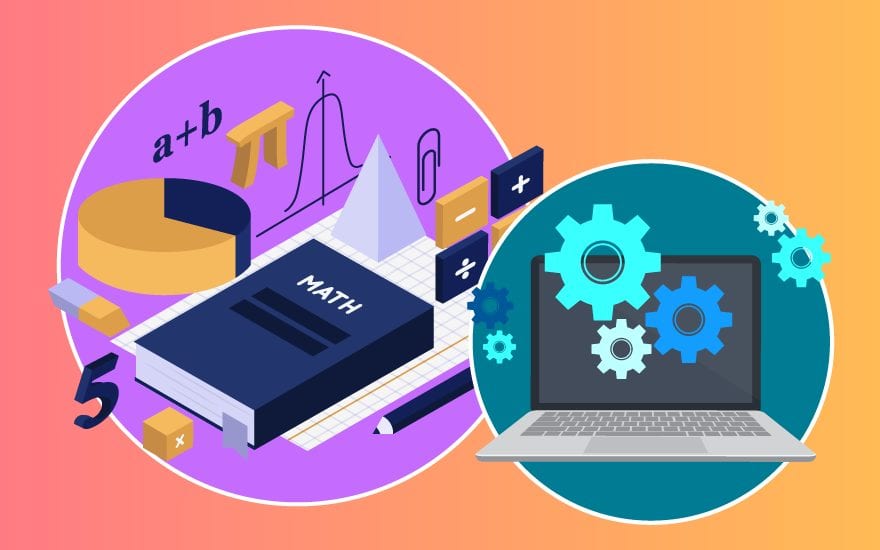
• Define and give examples of basic mathematical objects such as sets, relations, functions and Boolean algebras.
• Describe basic concepts of mathematical logic and use it to analyze and establishing truths about mathematical statements
• Use basic notions of counting, such as permutations, combinations and pigeon hole principle, to enumerate well-defined sets.
• Describe basic concepts and probability theory and use the concept of random variables, mean and variance to give quantitative descriptions of probabilistic events.
• Acquire the discrete mathematics skills needed to analyze, model and solve problems in
Information and Communication Technology.

Course Aim/Intended Learning Outcomes:
At the completion of this course student will be able to
• Identify the correct formation of letters and mechanics of writing for the English language.
• Demonstrate accuracy and efficiency in typing in the English language
• Create well-organized essays, reports, CVs, Cover letters and questionnaires that are structured according to acceptable standards.
• Demonstrate skills in retrieving information by listening.
• Illustrate professional speaking skills in general communication, presentations and public speaking.
• Apply and demonstrate effective telephone skills
• Apply and demonstrate effective interview skills to face and conduct interviews
• Illustrate professional speaking skills in general communication, presentations and public speaking.
• Demonstrate a critical understanding of reading comprehension and comprehension strategies.
• Apply practices required to summarize and paraphrase a given text.

Miracle Certified Foundational Web App Developer

Introduction to Robotics for Kids
Building Your First Robot
Exploring Sensors and Actuators
Fun Projects with Robots

Advanced Robot Programming for Kids
Introduction to Artificial Intelligence for Kids
Hands-On AI Projects with Robots
Robotics Showcase and Competition

Foundations of Robotics
Intermediate Robotics Programming
Advanced Sensors and Actuators
Robotics Projects for Juniors

Foundations of Robotics
Advanced Sensors and Actuators
Robotics Programming and Control
AI Fundamentals for Robotics

Advanced Robotics Systems
Machine Learning for Robotics
Robotics Project Development
AI Applications in Robotics

Robotics Engineering Principles
Autonomous Robotics
Computer Vision in Robotics
Robotics Innovation and Future Trends
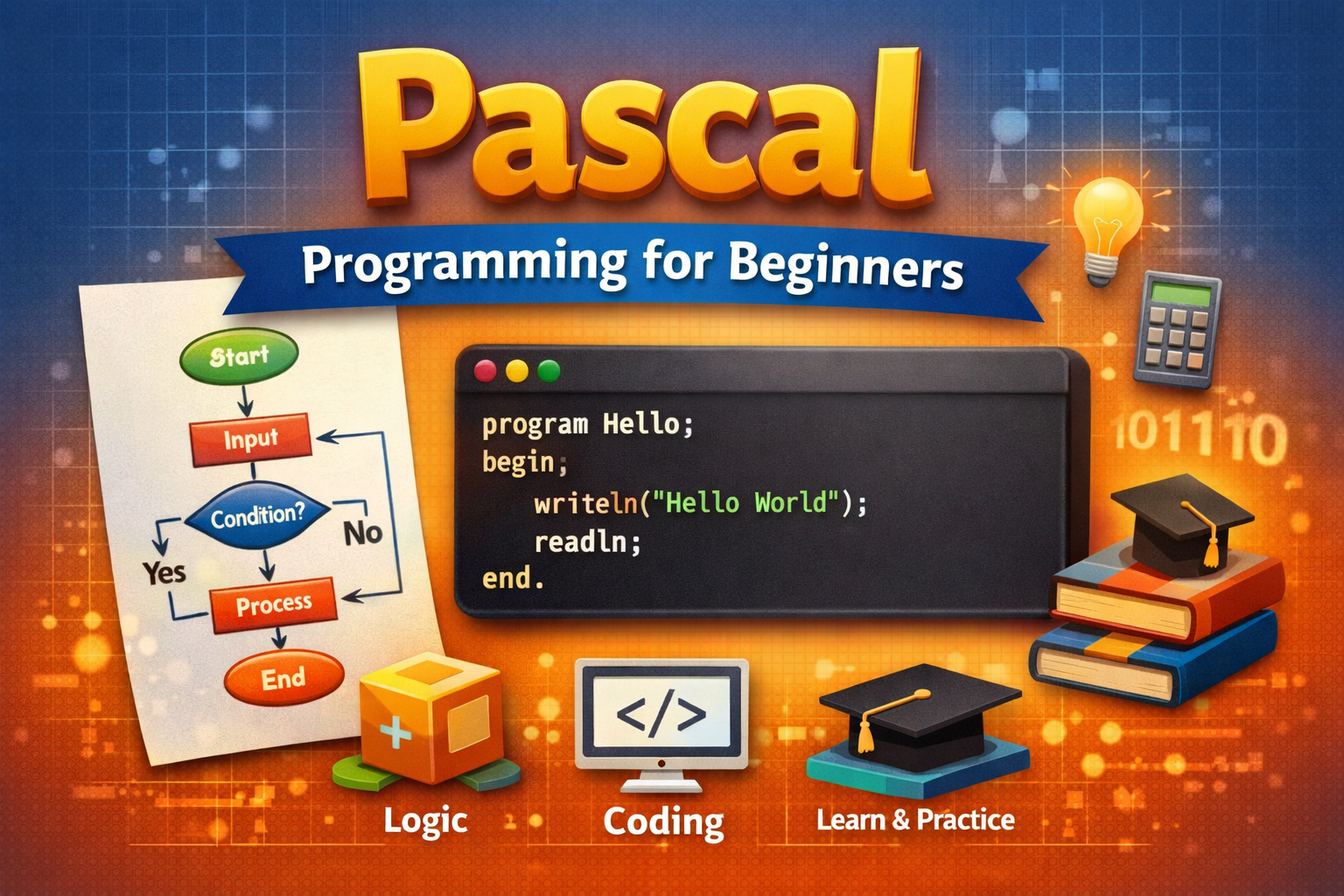
This course is designed for G.C.E. Ordinary Level (Grade 11) ICT students to learn programming fundamentals using Pascal, as required by the Sri Lankan ICT syllabus.
Pascal is used to develop logical thinking, problem-solving skills, and structured programming knowledge, which are essential for ICT examinations and future software development studies.
Throughout this course, students will learn how to design algorithms, understand program flow, write correct Pascal programs, and apply programming concepts to real examination-style problems.
The course begins from basic programming concepts and gradually progresses to O/L examination-level programming questions, ensuring students gain both theoretical understanding and practical coding skills.